
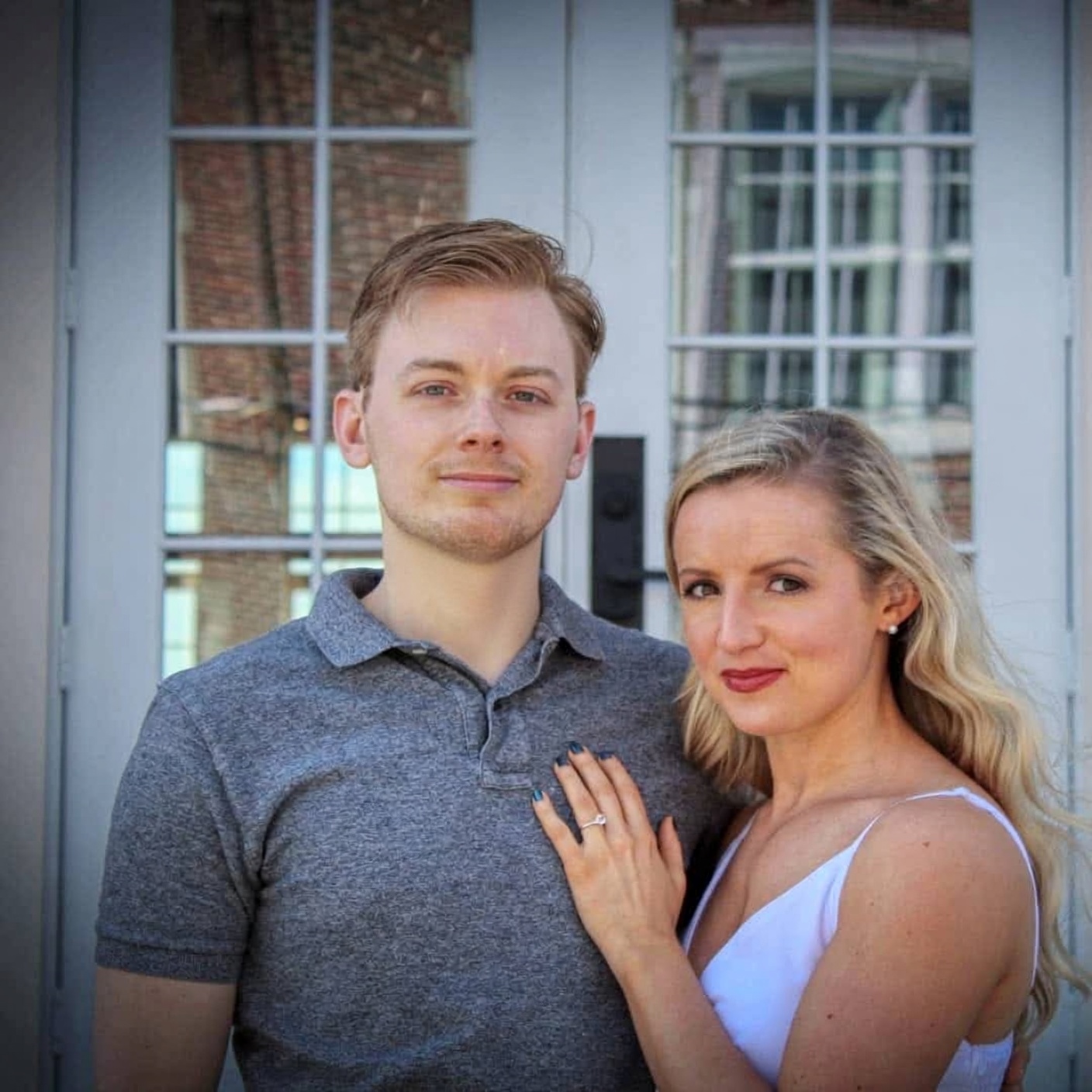

Fresh out of St Xavier HS in Ohio, I headed 1000 miles south to St Leo University in Florida. I studied psychology, focused my coursework on personality and behavior, and conducted independent research. Halfway through, I joined ΣΑΕ and got more involved by playing intramural sports and lifting seriously for the first time. Quietly, I was facing years of depression, until consistent training gradually lifted that fog and proved to be the solution. I earned my bachelor's degree in 2014, met my future wife shortly after, and together we began the process of figuring out life as we moved across FL → KY → OH → GA.
My inspiration to coach began growing steadily as I continued lifting and learning throughout our moves. We eventually settled in Georgia in summer 2016, our home ever since. Immediately, I committed to personal training, began working at a gym, and earned my ACE Personal Trainer Certification by the end of the year. Unfortunately, the commercial gym model developed my frustration instead of fulfillment.
This ignited a drive to build something greater, fueling my desire to learn more beyond training. I knew coaching could be more valuable with a deeper integration with psychology and a broader purpose, which led me to earn the new ACE Health Coach Certification in 2017. More importantly, continuing education exposed something critical: the top experts discuss high-order principles that guide all decision-making, not just methods. This inspired me to refine my own philosophy and distill what I learned. The process illuminated my purpose, inspiring the new Stronger Health Coaching identity and creation of SHC Principles.
Committed to this philosophy, I earned my Precision Nutrition L1 Certification in 2019. Soon after, COVID shut down the world. This unexpected free time naturally enabled me to continue writing and concentrate on a hierarchy for health and coaching categories, the SHC Priorities. With in-person coaching socially discouraged, I returned to the workforce and landed in a corporate setting. I chose to apply my skills and accepted every opportunity over 4 years to teach my peers, develop new-hire training, build a quality assurance department from the ground up, and provide professional 1-on-1 coaching to each of 60+ team members. Eventually, I chose to walk away.
Now, I'm all-in and dedicating my time to Stronger Health Coaching!
▼
1. Define and Quantify
All information must be explicitly defined to be truly useful.
In doing so, each detail is clearly communicated and measured. Vagueness and ambiguity result in misinterpretation, allow undefinable or meaningless goals, and may even harbor ill-intent. SHC maintains a Glossary page based on available medical terminology, personal interpretation of experts when medical literature is absent, and contrasting examples when necessary. SHC requires quantifiable objective data and subjective feedback for verifiable progress in each health priority. This principle delivers clarity in communication and verifiable, measurable results throughout the coaching process while eliminating ambiguity.
▼
2. Education via Diversified Expert Sources
Effective decisions for lifelong health emerge only from information acquired from an array of qualified sources with variation in expertise.
This exposes a broader range of available options and refines selection to the few with robust, credible support. Reliance on a single source or limited information inevitably misses viable or even superior alternatives, overvalues biases, and fails to challenge extremes. SHC supports education by sharing and referencing a Sources page, which lists credible professionals from diverse backgrounds in each domain and specifies their expertise and achievements. Sharing source material provides the starting points for education, validation for all coaching advice, and an invitation to challenge SHC’s own biases. This principle delivers perpetual knowledge to independently navigate lifelong health strategies with diverse credible support and accelerated by recognizing and bypassing persistent weak claims.
▼
3. Sustainability and Flexibility
Proper health resolutions require sustainability and flexibility to be successful for a lifetime.
This combination ensures actions can be applied as needed at any time while remaining adaptable to life’s inevitable changes. Any plan that sets an end date or yields inconsistent adherence is inherently unsuccessful long-term. Rigid protocols are self-limiting and cannot be adjusted, incompatible with the reality of constant change. SHC therefore implements a robust intake process to establish personal starting points and appropriate progressions. All resultant advice adheres to higher order principles, which relentlessly orient toward lifetime success by highlighting and guiding modification daily. This principle ensures preferred resolutions are also enduring yet adaptable throughout life.
▼
4. Everything's on a Spectrum
All variables exist on continuous spectrums, requiring individualized placement rather than absolute or universal standards.
Further, any placement is variable within a personally relevant spectrum that also varies over time. These spectrums refine the application of other principles by personalizing variables, filtering source relevance, and resetting effective boundaries. Operating with absolutes disregards unique factors among individuals, assigns biased requirements for resources, and sets rigid standards for advice. SHC establishes general standards and starting points in the Glossary, Sources, and coaching process, which are then applied to each individual, personalized and continually refined. This principle focuses each principle on effective decision-making with present context.
▼
5. Long-Term Health Strategies
Health arises from the summation of all actions over a lifetime, although no singular action determines future health.
Health is therefore a long-term outcome, requiring a long-term focus to understand the true value in any decision. Small positive habits compound into great rewards over years and decades, while the effects of major deviations wash away after a few weeks or months. SHC continually challenges clients to personally reflect on decisions, to learn to evaluate the consequences for the present and future self. This principle orients all principles toward a future of great health by providing the scale to calibrate each decision.
▼
1. Sleep
Lightyears ahead of the others and easiest to explain: go to sleep, get 8 hours of sleep per night, and redeem lost sleep.
This cannot be overstated; sleep improves everything: nutrient utilization, body composition, stress relief, growth, memory, anti-depression, mood, skill acquisition, recovery, performance, socialization, everything. Conversely, if your sleep suffers, being 100% perfect in all other priorities still leads to negative health outcomes. Get your sleep.
A little over half of people believe they get enough sleep each night. That also means nearly 50% already know they don't sleep enough. Unfortunately, the statistical reality is even worse. The US reports an average 6.7-6.8 hours of sleep each night. That's over an hour lost every night, about 8.75hr lost each week. Imagine skipping sleep once a day for every single week. That's the average starting point. Sleeping less than 8hr per night leads to serious increases in health risks -- obesity, heart attack, coronary heart disease, stroke, asthma, COPD, cancer, depression, chronic kidney disease, diabetes, and more. Yet, only 1/3 of adults actually report 8 hours of good sleep.
▼
2. Nutrition
Oversimplified, uphold your nutrition goals by always eating enough, but ensuring not to overeat too often.
Maintain a caloric balance befitting your goals and TDEE, with an emphasis on macronutrients. Then, ensure adequate daily fiber and hydration intake. Diversify your meals to also improve vitamin and mineral intake. Lastly, adhere to a consistent meal routine and consider supplements to fill-in any gaps.
About 75% of people believe they embody healthy eating habits. Simultaneously, over 65% of adults are overweight or obese. The current rate of the obesity epidemic predicts over half of US adults will be obese by 2030. Healthy eating habits are absolutely no longer the norm in America. If your dietary habits match those around you, then you're likely exhibiting unhealthy behaviors. Overweight and obesity lead to heart disease, stroke, high blood pressure, diabetes, cancers, sleep apnea, asthma, sarcopenia, and an ongoing list of lethal diseases, including death. Moreover, this epidemic forced the term metabolic syndrome to describe the presence of multiple major diseases. At the opposite end of the spectrum, anorexia nervosa and similar undereating disorders represent the single deadliest mental health category, with their own equally long list of health risks.
- Nutrition and sleep – Certain foods might aid sleep or at least improve poor sleep. Secondarily, hunger pangs or overeating too late can keep you awake at night.
- …and stress – Certain foods can decrease cortisol level or simply be comforting in general. Meanwhile, hunger induces irritability.
- …for physical performance – Food fuels performance.
- …for recovery – Food is recovery.
- …and lifestyle – Food pervades all cultures, is an art, a social opportunity, a celebration, etc. Be mindful.
▼
3. Stress Management
Find your sources of stress and relaxation -- limit stressors, relax more.
First, know that all stress, regardless of source, is all just one stress. Financial, marital, physical, road rage, misbehaved children, work -- it's all one stress; and there's a limit to how much we can handle. Both acute and chronic stress have the potential to cause measurable damage. Identify, limit, and avoid known stressors whenever possible. Actively engage in relaxation, recovery, and positive mood to reduce accumulated stress.
On the surface, nearly 2 of 3 adults claim they do enough to manage stress. Yet, on a 1-10 scale (no stress to max stress), adults rate below 4/10 as a healthy amount of stress, but rate themselves consistently above 5/10. And, 24% rate themselves above 8/10! Stress is rising; and we can't ignore it away. Chronic stress increases risk of heart disease, heart attack, stroke, asthma, obesity, diabetes, headache, anxiety and depression, gastrointestinal problems, Alzheimer's, aging, and early death. Stress is a direct source to just about every major disease, despite "stress" not being written on any doctor's notes or death certificates.
- Stress and sleep – Chronically high and acute stress can diminish sleep quality.
- …and nutrition – Unmanaged stress can impel eating disorders.
- …and physical performance – Acute increases of cortisol improve the flight or fight response and subsequent performance. Excess stress can distract or directly reduce performance.
- …and recovery – Chronic increases of cortisol decrease muscle recovery. Chronic stress deteriorates numerous functions within the body, including visceral damage likened to diabetes, abdominal fat gain, clinical depression, etc.
- …and lifestyle – Chronic stress leads to asocial behavior and loss of pleasure in once enjoyable activities.
▼
4. Movement
Use it or lose it! A truthfully effective approach, but obviously incomplete.
Start by creating movement periodically throughout your day to combat this sedentary culture. Then, by introducing controlled physical stress to your bodies, we'll coax innumerable adaptations. To do so, we must apply the appropriate stress at the proper amount and time by following the scientific principles of strength training.
Half of US adults claim to achieve vigorous physical activity weekly. In reality, over 80% fail to meet the minimum recommendations, which are likely set too low as is. The average adult also spends about 6.5 hours per day sedentary -- nearly half adults reporting over 12hr daily sedentary and 28% being completely sedentary. A sedentary lifestyle is a leading cause for obesity and the myriad of health risks to come with it (see: Nutrition). Weak muscle and bone contribute directly to falling and subsequent injuries. Falls injure 1/4 of adults aged 65+ each year, cause 95% of hip fractures, are the leading cause of traumatic brain injury, and is the second leading cause of unintentional injury death worldwide at nearly 650k per year.
- Movement and sleep – Balanced physical activity can improve sleep. Too much volume or too high intensity can interfere with sleep patterns.
- …and nutrition – This is why we eat, to heal from all daily activity, training, injury, illness, and all the biological costs of staying alive.
- …and stress – Certain physical activity may act as stress relief, but physical activity is itself a stressor in the end. Proper training induces adaptations to handle more stress.
- …and lifestyle – movement can be a social opportunity. Overall, it improves self-efficacy and should enhance lifestyle.
▼
5. Lifestyle
Apply the other four priorities to improve your lifestyle. Become a better you.
Reflect on your own personality, self-efficacy, and behaviors. Learn to hold yourself accountable and when to accept deviations. And adjust your approach to pain.
Half of adults report they've recently allowed their personal stress to affect others. You are not just yourself. You're part of a family, a friendship, a workplace. Your social networks are part of you. It's important we cultivate ourselves within the context of others, too. Chronic pain affects over 30% of adults. That's more people than diabetes, heart disease, and cancer combined and leading the use of health care systems. Pain eventually affects all of us, but is not a normal state.
Personal & Business Details
My foundation combines formal education in psychology, purpose-driven certifications, and experience in professional corporate coaching from new hires to 30+ year veterans.
Education & Certifications
- ◆ BS Psychology (2014)
- ◆ CITI Social/Behavioral Research (since 2009)
- ◆ Precision Nutrition Level 1 Coach (since 2019)
- ◆ Mind Pump Elite Trainer Academy (since 2026)
- ◆ Pre-Script Level 1 (next, TBA)
- ◆ Former ACE Personal Trainer (2016–2022)
- ◆ Former ACE Health Coach (2017–2021)
Business & Service Details
- ◆ Owner & Health Coach, Stronger Health Coaching (since 2020)
- ◆ Georgia LLC formed 2025
- ◆ General & Professional Liability Insurance
- ◆ Concierge hybrid model: In-person sessions at your preferred location + virtual support
- ◆ All-inclusive service, Primary tiers: Weekly Coaching, Full-Time Coaching
- ◆ All services include comprehensive initial assessment; month-to-month, no long-term contracts
Get Stronger Today
Select a free PDF guide! Instant access to get you started on prioritizing your health!
Zero Cost • No Credit Card Required • Instant Access
Frequently Asked Questions
+ How does psychology relate to personal training or health coaching?
Coaching is applied psychology. While training regimes and diet plans can achieve results, true success is defined by the behavior change and habit formation that maintain those results after the program ends. Additionally, everyone encounters internal barriers along the way – fear of failure, self-doubt, demotivated, disorganized. Coaching is the process of identifying and resolving those psychological barriers.
+ Why not just hire a trainer at my local gym instead?
Your local gym offer is very limited, likely a standard package for 30-60 minute sessions with a trainer and nothing more. And once you learn basic movements, you’re paying someone to be a stopwatch and rep counter. I’m providing additional coaching like nutrition, virtual support between sessions, the ability to schedule sessions anywhere, all backed by multidisciplinary credentials. Training is the easy part; and even results depend on other priorities, which is why my coaching is focused outside the gym.
+ Why are your personal trainer and health coach certifications expired?
Unfortunately, the classic certifications simply have no value. Even insurance providers don’t care to ask. You might expect certifications to teach applicants how to perform movements, require demonstration how to train people, plan workouts and trainings programs, but they don’t. As they explain in their study material, these certifications are only meant to establish a minimum level of competence. I’m not wasting my time with the lowest possible standard. Instead, I’m seeking highly valuable education and applicable skills.
Are you ready to Get Stronger, Get Healthier?
Meet Your Coach and let's discuss if health coaching is right for you. Schedule a call to discuss your needs, learn about health coaching, and determine your best next steps.
Book Your Free Discovery CallFree Call • No Credit Card Required • No Contract